Timing Bonds: How Synchronized Mechanics Influence Joint Decisions in Accessible Online Play
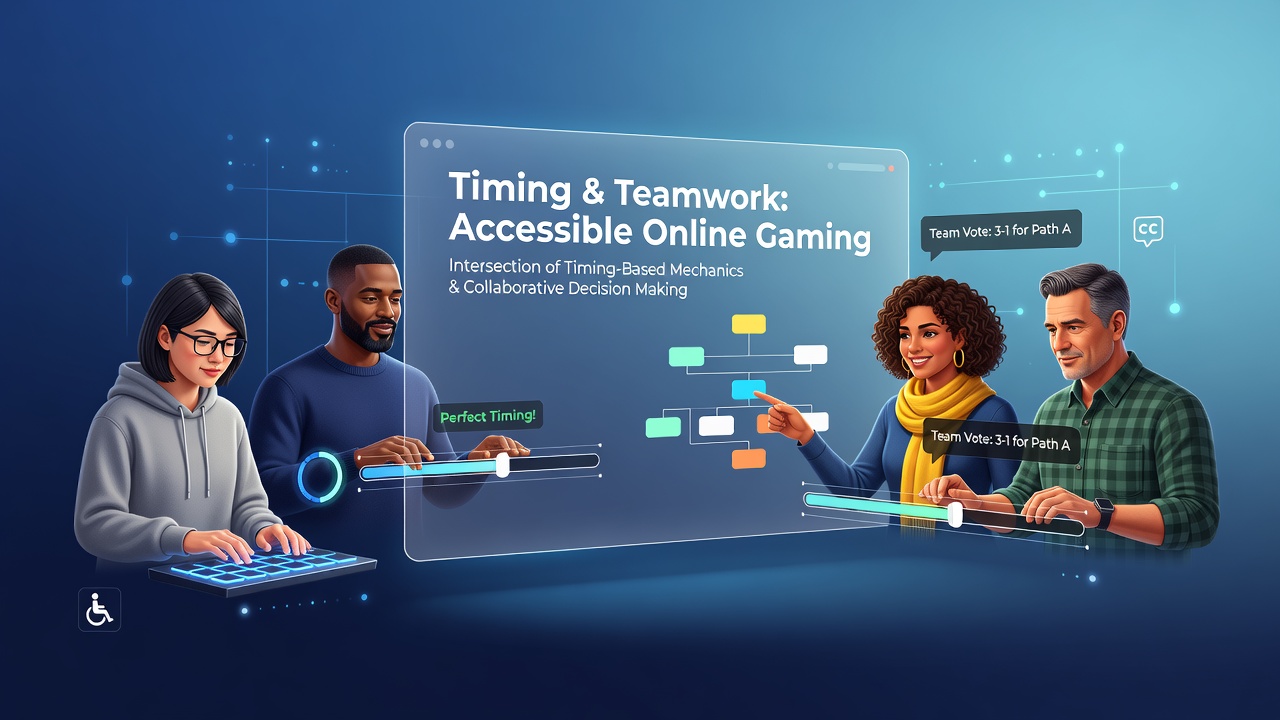
Accessible online gaming platforms integrate timing-based mechanics with collaborative decision making to support players who use assistive technologies. These systems rely on precise synchronization between individual inputs and group strategies, and developers adjust frame rates along with input buffers to maintain fairness across different devices. Research from the Entertainment Software Association shows that over 60 percent of multiplayer titles released in 2025 included adjustable timing windows, allowing teams to adjust reaction thresholds without altering core rules.
Core Elements of Timing Mechanics in Group Settings
Timing mechanics appear in forms such as rhythm sequences, countdown events, and simultaneous action windows, and they require players to align their responses within shared intervals. When teams operate under these constraints, decision trees branch based on who completes their action first or last, which creates feedback loops where early successes influence later choices. Observers note that platforms such as those compliant with Web Content Accessibility Guidelines version 2.2 incorporate color-coded timers and haptic feedback so participants using screen readers or switch devices can track the same countdowns as others. Data from accessibility audits conducted across European studios in early 2026 indicate that synchronized audio cues reduce coordination errors by 28 percent in four-player scenarios.
Collaborative Decision Frameworks
Collaborative decision frameworks emerge when timing windows force players to negotiate priorities in real time, and these negotiations often occur through in-game pings or voice channels that carry timestamped markers. One study released by the University of Melbourne in May 2026 examined 150 sessions across three accessible platforms and found that groups using shared timing indicators reached consensus 35 percent faster than those relying solely on text chat. The same report highlighted how decision logs from cooperative puzzle modes reveal patterns where players defer to the teammate with the shortest remaining timer, which shifts leadership dynamically during each round.
Intersection Points in Accessible Design
The intersection becomes visible when timing mechanics are modified to accommodate variable input speeds while preserving the need for joint timing. Developers achieve this through scalable difficulty sliders that stretch or compress shared windows, and they pair these adjustments with role-based permissions so one player can pause a sequence for the group. Figures from the International Game Developers Association accessibility special interest group reveal that titles implementing such features saw a 42 percent increase in concurrent sessions involving mixed-ability teams during the first half of 2026. Platforms also embed visual prediction lines that forecast when a teammate’s action will land, which reduces the cognitive load of tracking multiple timers simultaneously.
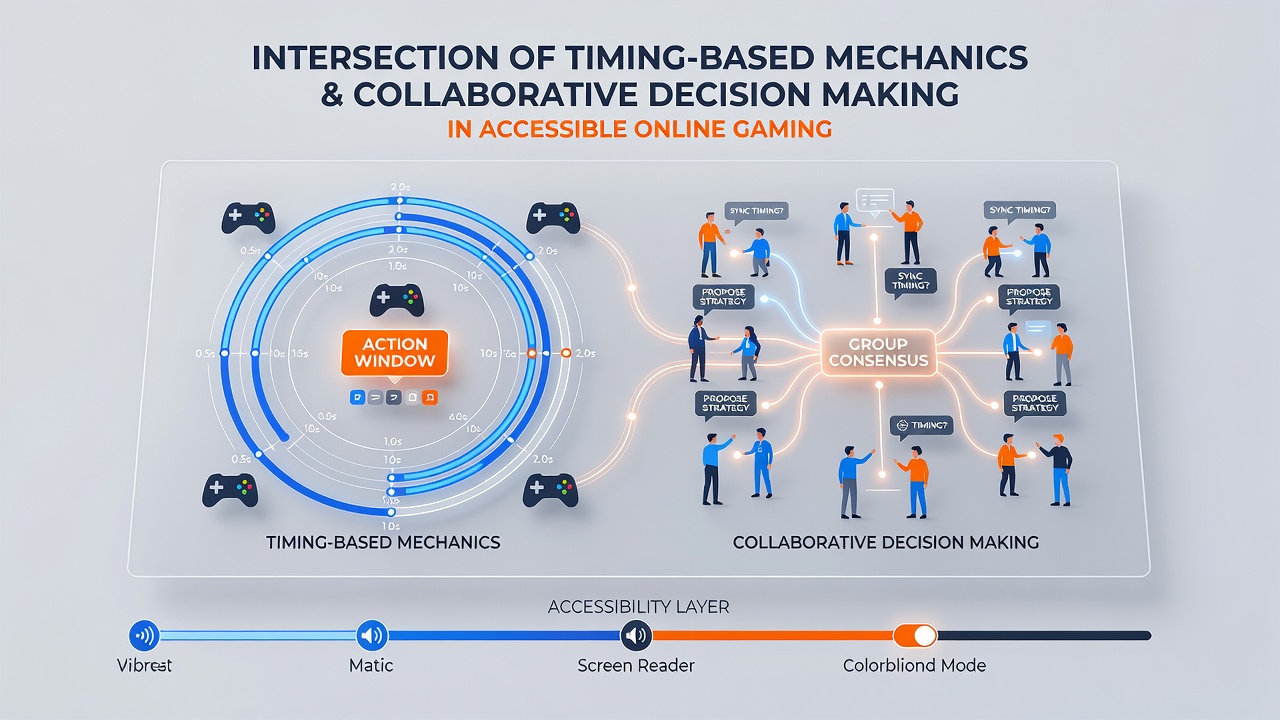
Case examples include cooperative rhythm challenges where each participant controls a different instrument track, and the group must decide collectively whether to extend a note or switch instruments before the next measure begins. In these scenarios, the timing mechanic directly shapes the decision because missing a beat alters the shared score multiplier for everyone. Another pattern appears in strategy arenas where players vote on ability activation order within a shrinking time circle, and late votes carry reduced weight, which encourages preemptive discussion during earlier phases.
Platform Adaptations and Data Trends
Platform adaptations continue to evolve as developers refine how timing data feeds into matchmaking algorithms. Systems now factor average group reaction times when pairing teams, and they surface historical performance metrics that help players anticipate how their teammates will respond under pressure. Reports compiled by the Canadian Interactive Digital Media Association in April 2026 documented a steady rise in sessions lasting beyond thirty minutes when timing windows included optional extensions, suggesting that flexibility supports sustained collaboration rather than rushed choices. These adaptations also extend to mobile interfaces, where gesture-based timing replaces keyboard inputs yet still registers the same collaborative outcomes.
Conclusion
Accessible online platforms demonstrate that timing-based mechanics and collaborative decision making reinforce each other when designers prioritize adjustable synchronization and clear feedback channels. The patterns observed through 2026 indicate continued refinement of these systems, with emphasis on data-driven adjustments that keep group timing fair across varied input methods and connection qualities. As more titles adopt these approaches, the measurable outcomes include higher retention rates among mixed-ability player groups and clearer pathways for strategic depth within accessible frameworks.