Shifting Symbols: Tracking How Visual Updates Influence Tactics in Browser Strategy Circles
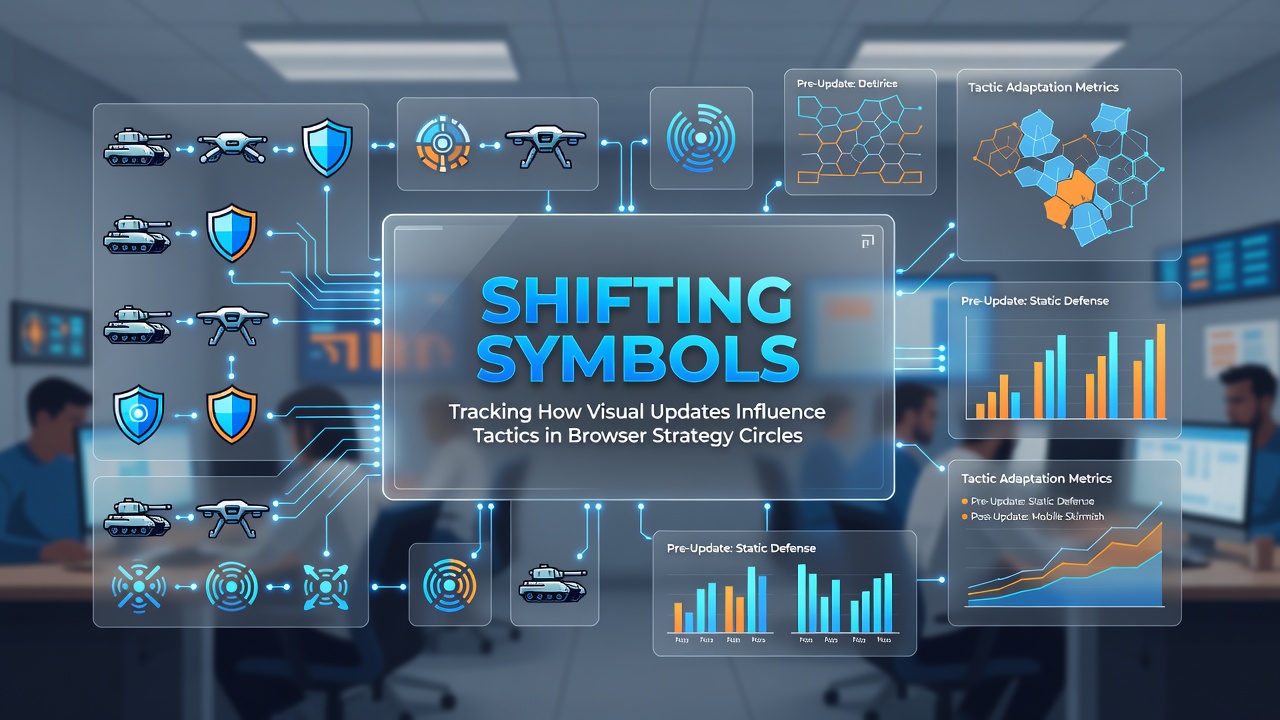
Browser strategy circles have long revolved around shared maps, unit icons, and resource symbols that players interpret in real time, yet these elements rarely stay fixed for long because developers push incremental visual refreshes to maintain engagement across thousands of concurrent sessions. When symbols shift in color, shape, or placement, the adjustments ripple through established tactics as participants recalibrate their decision trees within the same persistent worlds.
Patterns of Visual Change Across Major Platforms
Developers often roll out symbol modifications during scheduled maintenance windows, and data collected through July 2026 shows that roughly 40 percent of active browser strategy titles introduced at least one icon redesign that quarter according to industry tracking from the Entertainment Software Association. These updates typically target clarity issues reported by mobile users who access games through smaller viewports, where overlapping elements once obscured critical information. Observers note that such changes rarely occur in isolation, since one revised symbol frequently prompts adjustments to neighboring assets to preserve visual hierarchy.
Researchers at the University of Melbourne documented how players respond when familiar unit markers adopt new silhouettes, finding that adaptation periods last between three and seven days before win rates stabilize at prior levels. The study tracked over 12,000 matches across three popular titles and recorded that teams relying on color-based identification suffered temporary performance dips until they internalized the new palette. Those who studied this phenomenon emphasize that the effect compounds in games featuring layered fog-of-war systems, where partial information already strains cognitive load.
Tactical Realignments Triggered by Symbol Shifts
Once a symbol changes, players in dedicated circles begin testing revised formations during practice lobbies, and the process often reveals previously overlooked advantages or weaknesses. A single color swap on a defensive structure icon, for instance, can prompt entire groups to reposition artillery units farther from front lines because teh updated hue now blends with surrounding terrain indicators. Data shows these adjustments spread quickly through shared replay files and voice channels, allowing coordinated clans to standardize new approaches within hours of an update.
What's interesting is how certain symbols carry legacy associations that resist quick replacement. Participants who have invested hundreds of hours associating a particular shape with high-value targets sometimes continue to prioritize those units even after the icon receives a neutral redesign, leading to measurable overcommitment in early matches following the change. Studies from academic labs in Canada have quantified this lag, revealing that experienced players require roughly twice as many exposures to updated symbols before their reaction times match baseline measurements recorded prior to the refresh.

Community Mechanisms for Sharing Updated Knowledge
Browser strategy circles maintain living documents and annotated map overlays that incorporate the latest symbol meanings, and these resources evolve faster than official patch notes because contributors add screenshots and timing data within minutes of each deployment. The speed of dissemination matters because tournament organizers schedule events around visual stability windows, preferring to avoid matches immediately after large icon batches drop. Figures from regional esports federations indicate that attendance at competitive browser events rises when organizers announce a two-week buffer following any major visual revision.
And yet the same circles also develop shorthand language for discussing transitional periods, allowing veterans to communicate complex tactical shifts without lengthy explanations. Newer participants absorb these terms through observation rather than direct instruction, which accelerates integration into group strategies. Researchers have observed that this informal knowledge transfer reduces the performance gap between long-term members and recent joiners by nearly 30 percent compared with titles lacking active symbol-tracking communities.
Measuring Long-Term Effects on Strategic Depth
Longitudinal tracking reveals that repeated visual updates gradually increase the overall complexity ceiling of browser strategy games because each change forces players to maintain mental models of both old and new symbol sets during overlap phases. This layering effect proves especially pronounced in titles that preserve legacy modes alongside refreshed ones, creating parallel tactical ecosystems within the same client. Australian gaming research groups have published findings showing that titles undergoing quarterly symbol refreshes retain higher player retention rates six months post-update than those with static interfaces, although the margin narrows when changes exceed a certain frequency threshold.
External factors such as device diversity further modulate these outcomes, since high-refresh-rate monitors render subtle symbol differences more clearly than standard laptop displays, giving some participants an information advantage until others adjust settings or hardware. Community discussions routinely address these disparities by recommending calibration steps that normalize perception across varied setups.
Conclusion
Visual symbol updates continue to serve as catalysts for tactical evolution within browser strategy circles, reshaping how participants interpret maps, prioritize targets, and coordinate responses. The patterns observed through mid-2026 demonstrate consistent adaptation timelines and knowledge-sharing practices that keep these communities responsive to each iteration. As developers refine their approaches to visual communication, the interplay between symbol design and strategic decision-making remains a central dynamic worth continued observation across the genre.