Nexus Nodes: Mapping Interconnected Choices in Browser-Based Multiplayer Adventure Puzzles
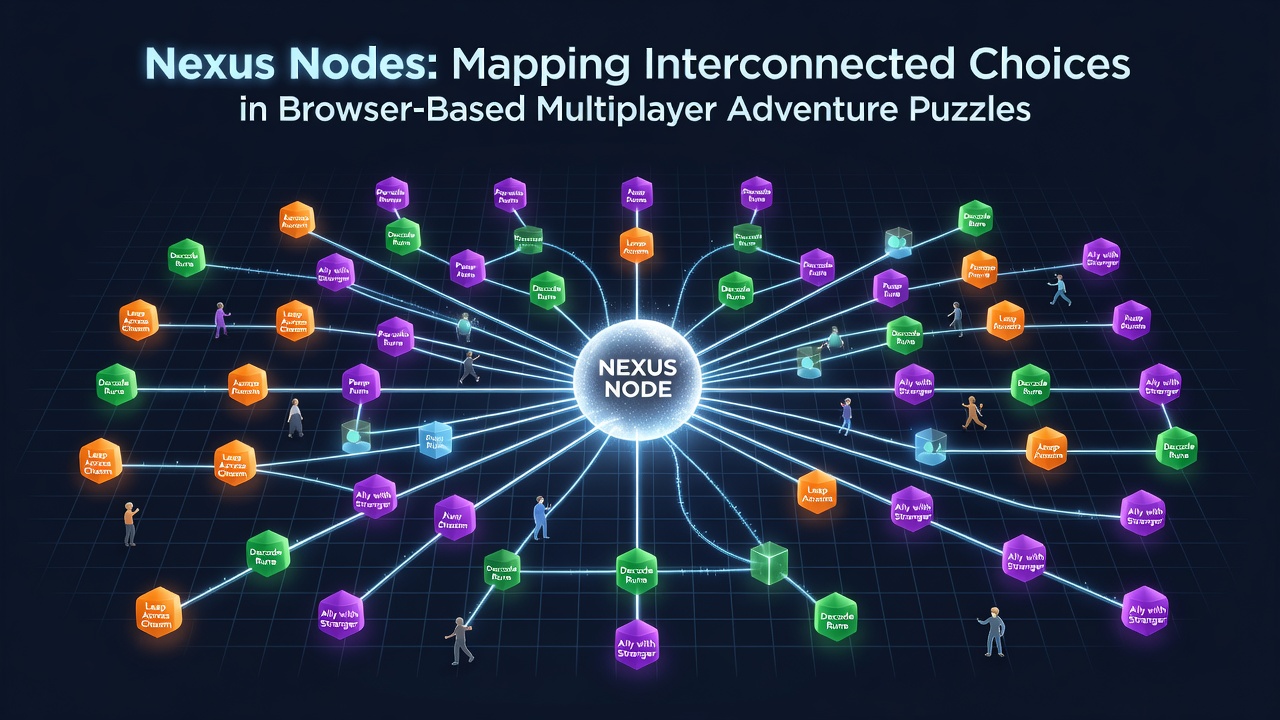
Browser-based multiplayer adventure puzzles have developed systems that track player decisions through structures known as nexus nodes, which function as central points where multiple choice paths intersect and influence shared outcomes. These nodes organize sequences of actions across participants connected in real time through standard web browsers without requiring downloads or specialized software.
Data from industry monitoring groups indicate that participation in episodic browser titles increased steadily between 2023 and 2025, with developers incorporating visual mapping tools to display how individual selections affect group progress. Nexus nodes allow participants to view condensed representations of prior decisions, revealing connections that span several episodes and multiple users simultaneously.
Core Mechanics of Nexus Node Systems
Each nexus node records inputs from all active players at specific decision points, then recalculates available options based on cumulative selections rather than isolated choices. This process operates through client-side scripts that sync with server states at regular intervals, ensuring consistency across different devices and connection qualities. Researchers at institutions such as the University of Waterloo have documented similar decision-mapping techniques in academic simulations of collaborative problem solving.
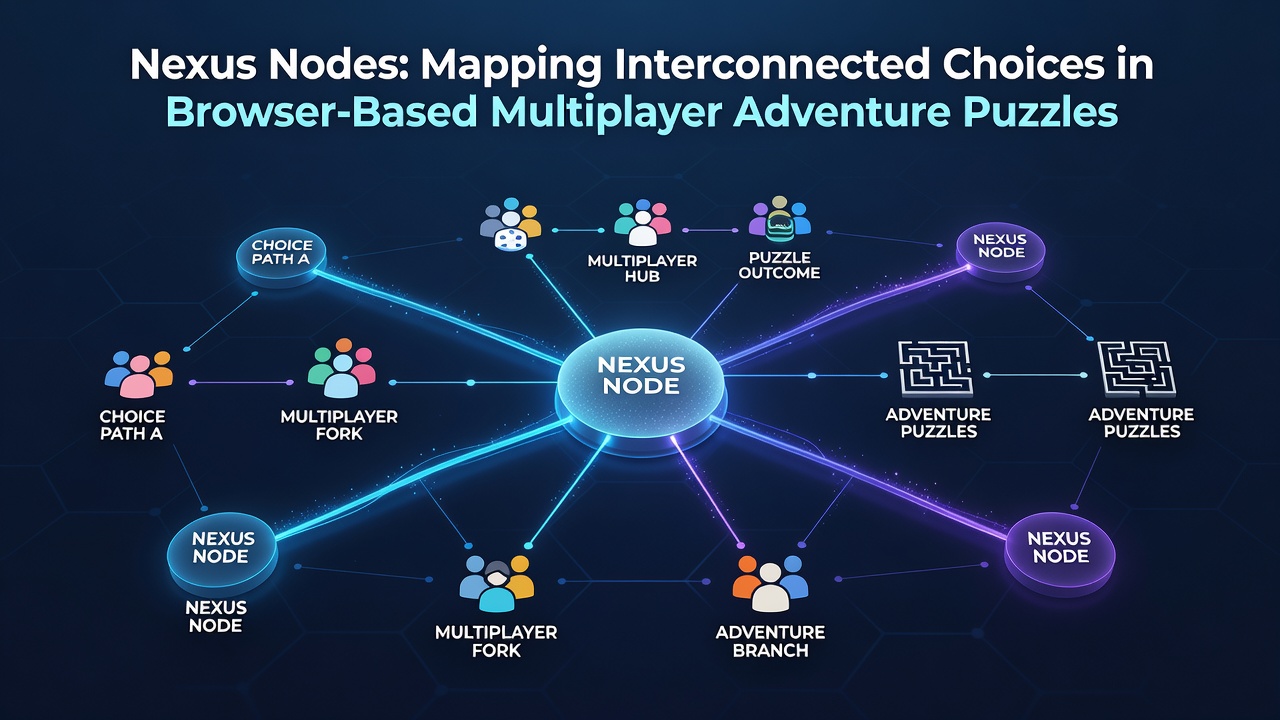
Game interfaces present these nodes as expandable diagrams or highlighted regions within the browser window. Players can select a node to review contributing actions, which appear as linked entries showing timestamps and participant identifiers. The structure prevents linear progression from dominating play sessions because divergent choices often converge again at later nodes, creating repeated opportunities for collective adjustment.
Implementation Across Different Title Formats
Developers integrate nexus nodes into both short-session arcade-style adventures and longer narrative sequences that unfold over multiple days. In titles released during 2024 and 2025, the mapping layer operates independently of core puzzle mechanics, allowing designers to add or modify node connections through server-side updates without altering client files. One documented case involved a European studio adjusting node density in response to player retention metrics collected over a six-month period.
Persistent state sharing occurs when completed nodes store outcome variables that carry forward, influencing probability distributions for future branches. This approach differs from purely randomized systems because the stored data remains visible and queryable by participants, enabling groups to plan subsequent moves with reference to accumulated history rather than memory alone.
Observational Data and Platform Trends
Usage statistics compiled by the Entertainment Software Association show browser gaming sessions averaging longer durations when interactive maps accompany puzzle content. The same reports note higher repeat engagement rates in titles that expose decision webs to all participants rather than concealing them behind individual progress screens. In June 2026 several platforms plan to introduce standardized APIs for nexus node visualization, which would allow third-party tools to render shared maps outside the primary game interface.
Connection latency continues to affect how quickly node updates propagate across users, yet developers mitigate this through predictive loading of likely branches. Studies conducted by the Interactive Software Federation of Europe have examined synchronization methods that prioritize critical node data over secondary visual elements during periods of variable bandwidth.
Player Interaction Patterns
Groups frequently establish informal protocols for addressing nexus nodes that contain conflicting proposals. Observers have recorded instances where participants designate a single user to finalize selections at high-impact nodes while others focus on preparatory actions that feed into those same points. The resulting coordination produces measurable shifts in completion times compared with uncoordinated sessions, according to aggregated telemetry released by multiple browser game portals.
Because nodes remain accessible after resolution, players can revisit earlier mappings to analyze cause-and-effect relationships. This retrospective function supports iterative strategy refinement across repeated playthroughs of the same episodic content.
Conclusion
Nexus node implementations continue to expand within browser-based multiplayer adventure puzzles by providing structured visibility into interconnected decisions. Platform updates scheduled through 2026 aim to standardize mapping features while preserving compatibility across varied connection environments. The approach supplies participants with concrete references for collective planning without altering the underlying puzzle or adventure frameworks that define these titles.